-
Q1: How do I order Romo fabric samples without wasting money?
-
Q2: Is Romo fabric durable enough for mattresses and furniture upholstery?
-
Q3: My client asked for "red velvet cookie crumb" color—what went wrong?
-
Q4: Can I use leopard mesh fabric for upholstery?
-
Q5: What's the deal with "data mesh vs data fabric"? Is it relevant to textiles?
-
Q6: What's the best way to spec Romo fabric for a commercial project?
-
Q7: Should I use Romo fabric samples for client presentations or work from digital renderings?
I'm the order manager for a mid-size interiors studio. I've been handling Romo fabric orders for 6 years, and I've personally made (and documented) 27 significant mistakes, totaling roughly $18,000 in wasted budget. This FAQ covers the questions I get asked most about ordering Romo fabrics—and the lessons I learned the expensive way.
Q1: How do I order Romo fabric samples without wasting money?
When I first started ordering Romo fabric samples, I made every mistake in the book. I ordered full sample books when I only needed a few swatches. I ordered from the wrong collection because I didn't check the product line. And I didn't realize that Romo's sampling program varies by collection.
Here's what works: check the Romo website first to narrow down what you need. Most collections offer individual swatches, so I order 3–5 individual swatches before committing to a full book. That cut my sampling costs by about 40%.
One thing I learned: sample turnaround can vary. In 2021, a group of samples for a hotel project arrived in 3 days. In 2023, the same order took 8 days because the UK warehouse was consolidating. Always factor in buffer time. Oh, and if you need samples for a client presentation, order a duplicate set. I lost my only set to a coffee spill before a big meeting and had to cancel. That was a $200 lesson.
Q2: Is Romo fabric durable enough for mattresses and furniture upholstery?
This is a question people ask me all the time, and my honest answer is: it depends on the specific fabric and application. Romo makes upholstery-weight fabrics appropriate for residential furniture and some commercial projects, but you need to check the technical specs for each fabric.
The mistake I made early on was assuming all Romo velvets were equally durable. They're not. I ordered 45 meters of a beautiful velvet for a restaurant banquette, and within 8 months, the seating areas showed wear. The fabric was rated for light residential use, not contract commercial.
What I do now: check the Martindale rub test results before recommending any fabric for upholstery. For furniture and mattress covers, I look for at least 30,000 rubs for residential, 50,000+ for commercial. Romo publishes these specs, but you have to ask for them. (Should mention: some of their contract collections have higher abrasion resistance, but the decorative residential lines might not.)
For mattresses specifically, fabric is only part of the equation. The mattress construction—quilting, foam density, stitch tension—matters just as much. A beautiful Romo fabric on a cheap mattress frame will fail, not because of the fabric, but because the underlying structure isn't there.
Q3: My client asked for "red velvet cookie crumb" color—what went wrong?
I love this story because it's so embarrassing. In September 2022, a client sent me a reference image of a red velvet cookie and asked for a fabric that matched the crumb color—that warm, deep reddish-brown with tiny brown speckles. I thought I understood. I found a Romo texture that looked close enough on screen and ordered it.
When the sample arrived, I saw the problem. The on-screen color was close, but in person, the fabric had a cool undertone while the cookie crumb had a warm undertone. I ordered a roll for a small project anyway, hoping it would work. It didn't. The client rejected it immediately. That's $1,100 in fabric wasted and a 3-day delay.
The lesson: use Pantone references, not descriptive names, when communicating with clients. Industry standard color tolerance is Delta E < 2 for brand-critical colors. Delta E of 2–4 is noticeable to trained observers; above 4 is visible to most people. A photo of a cookie won't give you that precision.
Now I ask every client to provide a Pantone reference or a physical fabric chip. If they can't, I order physical swatches in multiple similar colorways. Color names like "red velvet cookie crumb" are poetic but useless for production.
Q4: Can I use leopard mesh fabric for upholstery?
Mesh fabrics and upholstery are a tricky combination. I've used mesh for decorative overlays, room dividers, and curtain accents, but I've also made the mistake of recommending a mesh for furniture upholstery when it wasn't suitable.
Leopard mesh fabric is usually a knit mesh with a leopard pattern. It can work as a decorative overlay for furniture, but not as the primary upholstery. Mesh doesn't have the structural integrity of woven upholstery fabrics. It tends to snag, and if the mesh has large open areas, it won't hold up to daily use.
The one place leopard mesh works well is on indoor-outdoor furniture where the mesh is specifically rated for that purpose. I once assumed an indoor mesh would be fine for a covered patio. It wasn't. The UV exposure caused the pattern to fade within 6 months—a $700 lesson.
What I recommend: if you want a leopard pattern for upholstery, look for Romo's decorative animal print fabrics in proper upholstery weight instead of a mesh. You get the visual effect with the durability. Mesh has its place, but it's not the first choice for furniture you'll actually sit on.
Q5: What's the deal with "data mesh vs data fabric"? Is it relevant to textiles?
This one still makes me laugh. A tech-savvy client asked me about "data mesh vs data fabric" during a site visit, and I assumed they were asking about fabric for the project. I went into a whole explanation about mesh construction versus woven construction. They looked confused.
In IT, "data fabric" and "data mesh" are two architectural approaches to data management. Gartner defines data fabric as a unified data management layer, while data mesh is decentralized. Neither has anything to do with textiles. But the phrase collision is real—people looking up "fabric" for data projects can end up on decorative fabric sites.
The reason I bring this up: when comparing fabric options digitally, the same confusion happens in reverse. Search results blend technical specs, marketing language, and unrelated content. That's why I always verify fabric properties with the manufacturer directly rather than relying on what I find online. Use the digital tools—Romo's website, sample request systems, Pantone guides—but verify physical properties before committing.
It took me about 4 years and 20+ mistakes to understand that. The "data mesh vs data fabric" debate isn't relevant to choosing textiles, but the underlying lesson is: don't trust terms at face value. Get precise specifications.
Q6: What's the best way to spec Romo fabric for a commercial project?
This is where I'm most opinionated, because I've made every mistake in this category. My checklist:
First, get the technical specifications. Abrasion (Martindale), lightfastness, cleaning code, fire retardance. For a hotel project, you need heavy contract ratings. For a boutique store, medium-duty might be enough.
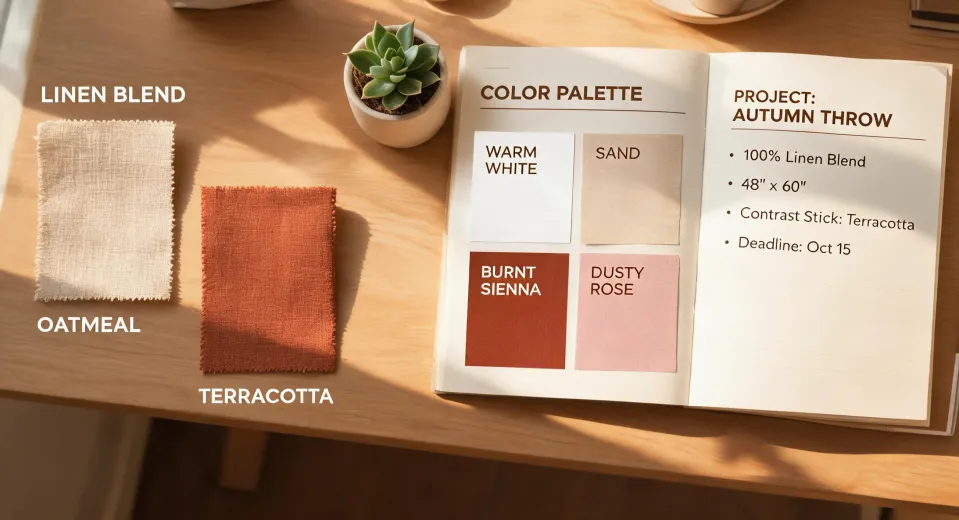
Second, order physical samples before ordering in bulk. I can't stress this enough. I once ordered fabric based on my laptop screen and ended up with a shade of terracotta that looked like dusty rose on my monitor. The client had specified "burnt orange." That was a $1,600 mistake in 2020.
Third, consider the application. Fabrics that work on a sofa might not work on a headboard or a dining chair. I learned this when I specified a stiff weave for a curved corner detail and the fabric didn't have enough stretch to wrap cleanly. The upholsterer had to cut new panels, costing us 5 extra days and $600 in labor.
Fourth, check lead times. Romo's lead times vary by collection and volume. My rule of thumb: quote a delivery date 2 weeks later than the initial estimate. When the fabric arrives early, you look good. When it arrives on time, you look prepared. That buffer has saved me more times than I can count.
Q7: Should I use Romo fabric samples for client presentations or work from digital renderings?
Digital renderings are getting better, and for early-stage presentations, they're useful. But I've learned to never make a final decision from a screen. The difference between a rendering and a physical sample is the difference between a map and the actual terrain.
The mistake that taught me this: in 2023, I presented a digital mockup for a residential project, and the client approved the pattern. When I showed the physical sample the next week, they said "that's not what I approved." The pattern was the same, but the scale felt different in person. We had to redo the entire presentation.
Now my policy: digital renderings for the shortlist, physical samples for the final decision. It's more work, but it's saved my reputation more than once.