I Used to Think My Job Was Finding the Lowest Price
I manage fabric and wallcovering procurement for a 40-person commercial interior studio. Our soft goods budget is around $460,000 a year. Over the last seven years, I’ve logged more than 1,800 orders in our cost tracking system. And I’m here to tell you something that might sound strange from a cost controller: the cheapest quote is not your friend in decorative fabric purchasing anymore.
The industry has evolved. What was sensible in 2019 is costing projects real money in 2025.
When I first started this job, I believed unit price was the only number that mattered. I’d compare per-yard costs and go with the lowest number. In 2022, that thinking cost us a hotel furniture order. The “budget” velvet looked acceptable in a two-inch sample. The full rolls arrived with a slightly different dye lot, and by the time the installer had cut four banquettes, the mismatch was obvious. The reorder, the rush freight, and the installer’s return trip added about $1,200 to a project we’d “saved” $600 on. Not great—and a clear lesson.
That was my initial misjudgment. I thought I was managing money. I was only managing a spreadsheet.
The Old Budget vs. Design Split No Longer Holds
For years, commercial fabric buying had a simple mental model. Contract fabrics from basic suppliers were one world. Decorative fabrics with showrooms and design authority were another. You crossed between them carefully because of price, lead time, and performance data.
That separation is breaking down. In 2025, brands like Romo sit at the intersection: decorative fabric ranges, wallcoverings, velvets, twills, knits, outdoor fabrics, and residential/commercial product families. When people search for “Romo fabrics latest,” they’re usually looking for this broader idea—not just “new colors,” but a multi-category design system that can be specified with confidence.
I know, because I ask every vendor the same five questions before I approve a specification: abrasion, lightfastness, cleaning method, width consistency, lead time. The latest Romo fabrics I’ve reviewed hold up to those questions. Some collections are not the lowest unit price. But they remove uncertainty from my project—and uncertainty has a line item.
A Specific Example: Romo Linara Fabric
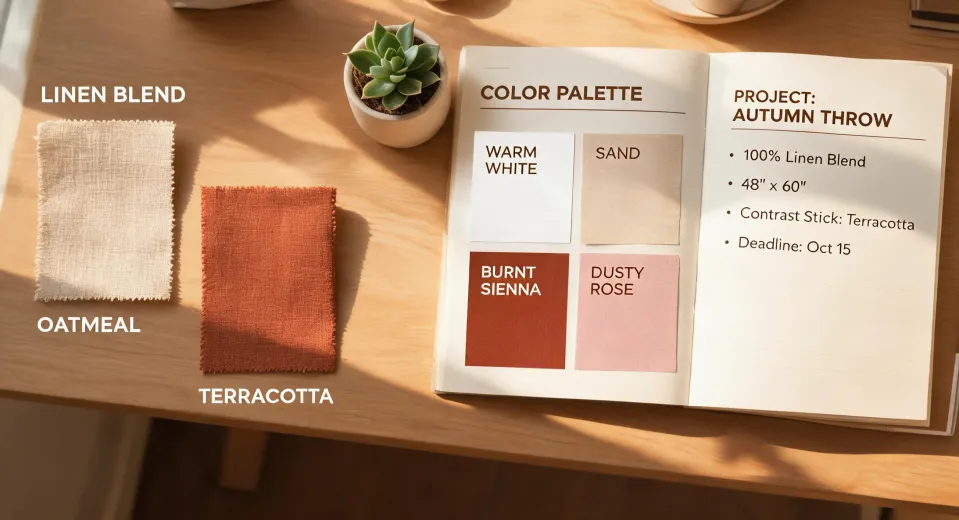
Take Romo Linara fabric. It’s a line I’ve used when the design brief asks for a relaxed, linen-like texture but the commercial project needs more predictable behavior. Two-inch samples make many linen-look fabrics feel similar, but full rolls can vary in weight, width, and color. Linara has become one of my defaults because the basics—consistent color, clean finishing, and available backup rolls—are already part of the product story. It doesn’t have to be the premium choice in every project. For me, its value is that it lowers the chance of a match problem six weeks after the initial install.
That is total cost of ownership. The fabric cost per yard appears on the invoice. The cost of a mismatch appears on no one’s invoice until it’s already paid.
Custom-Size Awning Fabric Shows the Same Trap
I can make the same argument outside an interior room.
In Q3 2024, I compared several quotes for custom size awning fabric for a restaurant terrace. The low quote had an attractive per-yard price. But custom size awning fabric rarely is as simple as yard price. That one needed a special-order width, a finishing treatment, and an extra seam because the standard roll couldn’t cover the full awning depth. A higher quote from another vendor made the panel in one piece and had the UV/water repellent finish in stock.
The higher quote was $480 more upfront. The lower quote would have failed—or at best, looked patched and required weatherproofing on site. In procurement, a low quote that doesn’t cover the actual need is not a low quote. It’s a partial quote.
The New Client Questions Actually Matter
Another sign the industry has changed is the kind of questions I get during selections. Last month, a client asked me whether I could match “the cast of blue velvet” from a sofa photo. That’s not a superficial request. The cast—the undertone of a blue velvet—can shift from cool to warm depending on pile direction, lighting, and monitor calibration. In a Romo velvet, I might see a blue that reads slightly green in daylight and slightly grey under spotlights. The only reliable answer is to check physical samples before ordering large yardage.
Another client asked, “what is modal in fabric?” A few years ago I might have waved it off as an apparel question. Modal is a semi-synthetic cellulose fiber usually derived from beech wood, often blended into home textiles for softness and drape. It’s not the first fiber I’d pick for heavy contract upholstery, but its appearance in a fabric question says something: clients are reading labels and comparing options in ways they didn’t before. Our procurement conversations need to answer that, not dismiss it.
Objections—and My Answer
People assume this is a long argument for choosing high-end decorative brands. It isn’t.
I’m as skeptical as anyone when “quality” is used to justify a vague price increase. I’ve built enough spreadsheets to know that price and quality aren’t always linked. The Association for Contract Textiles’ guidelines give a useful baseline for performance testing, and I expect documented evidence for any contract fabric claim. The question is not whether a fabric is expensive. The question is whether the manufacturer’s promises line up with measurable reality: color consistency, lead time, product range, and after-sale support (Source: Association for Contract Textiles, associationforcontracttextiles.org).
When a supplier delivers that package, I don’t object to paying a higher price per yard. I object to paying hidden costs later—rush fees, reorders, and unhappy end users.
So believe me when I say the industry is evolving. The fabrics and wallcoverings we specify today are more varied than ever. Romo is not the only group doing this well. But the companies that provide both design leadership and reliable procurement data are the ones I want in my budget. Not because I like their samples—though I do—but because when I calculate total cost over the life of a project, they cost less.
The old rule of fabric buying was simple: low quote wins. In 2025, the rule that wins is: the cheapest successful install wins. Those are not the same thing, and knowing the difference is the whole job.