There's no single right way to buy Romo fabrics
I'm an office administrator for a 200-person company. I manage facilities and office services purchasing—roughly $150,000 annually across 12 vendors. I'm not an interior designer. But when we renovated our reception area in 2021, I had to source upholstery fabric for 14 chairs, 3 sofas, and a wallcovering accent. That's how I got to know Romo fabrics & wallcoverings.
If you're reading this, you're probably in one of three situations. The advice that works for one will waste your time in another. So let's figure out where you are first.
Scenario A: You're specifying Romo for a new commercial project
Maybe you're a designer, a procurement officer, or an admin who got handed a mood board. You know you want Romo because the brand has a reputation for design-led quality—velvets, textures, classic patterns. But you don't know the first thing about ordering.
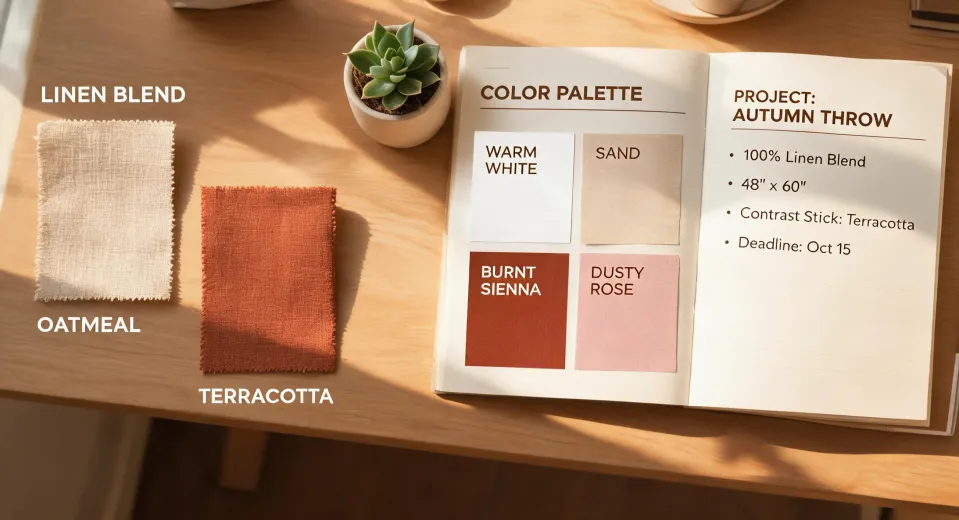
Here's what I wish someone told me: don't start with the website. Start with samples. Romo has showrooms and authorized dealers. Call one. Ask for a sample of the specific pattern and colorway. Most will send a memo sample for free or a small fee. Do not order 40 yards based on a screen image.
Most buyers focus on the per-yard price and completely miss the minimum order quantity, shipping, and cut fee. I learned that the hard way in 2022. I found a great price on a discontinued Romo velvet—$18 a yard cheaper than our regular supplier. Ordered 60 yards. The vendor couldn't provide a proper invoice with the manufacturer's name. Finance rejected the expense report. I ate $1,100 out of my department budget. Now I verify invoicing and documentation before placing any fabric order.
For new projects, here's a simple checklist:
- Confirm the pattern is current. Just because a dealer lists it doesn't mean it's not a discontinued Romo fabric in disguise.
- Ask for the flame retardancy rating. Commercial interiors often require specific standards. Romo can provide certificates, but you need to request them.
- Calculate total cost. Base price + shipping + sample fees + any custom treatment. The lowest quote often isn't the lowest total.
The value of a guaranteed lead time isn't the speed—it's the certainty. For a hotel opening, knowing your fabric will arrive on schedule is often worth more than a lower price with 'estimated' delivery.
I borrowed that mindset from printing vendors, but it applies here too.
Scenario B: You need to replace discontinued Romo fabrics
This is the hardest scenario. Maybe you have 8 chairs with a floral Romo pattern that's been discontinued. Or a client insists on matching an existing sofa. You search 'discontinued romo fabrics' and find a few online resellers with limited stock. What now?
I went back and forth between hunting down the original discontinued fabric and switching to a close alternative for two weeks. The original offered perfect continuity; the alternative offered half the price and immediate availability. Ultimately I chose the alternative because the project was a back office, not a client-facing space. But if it had been a hotel lobby, I'd have paid the premium for the original.
Here are your realistic options:
- Authorized stockists. Some dealers buy up discontinued Romo lines. Call around. Ask for a photo of the actual roll, not a stock image.
- Close-match alternatives. Romo's current collection may have a similar texture or color. Request side-by-side samples.
- Custom re-creation. Some mills can replicate a discontinued pattern, but minimums are high—often 100+ yards—and the price can be 2-3x the original. This only makes sense for landmark projects.
If I remember correctly, the last time I checked, a custom re-creation quote came in around $95 per yard with a 150-yard minimum. That was for a simple twill, though. Don't quote me on that for a complex velvet.
Scenario C: You're searching for upholstery floral fabric and got lost in weird terms
This is where most non-specialists end up. You type 'upholstery floral fabric' into a search engine. You get results about Romo, but also 'kevlar 29 fabric' and 'what does knit fabric mean.' It's confusing. Let me clear it up.
Kevlar 29 fabric is not a decorative fabric. It's a high-strength aramid fiber used in bulletproof vests, helmets, and industrial applications. It's not something you'd put on a chair unless you're designing a bank vault. If you saw it in a search result, ignore it. It's not relevant to residential or commercial upholstery.
What does knit fabric mean? Knit fabric is made by interlocking loops of yarn, rather than weaving warp and weft threads. This gives it stretch and a softer hand. In upholstery, knit fabrics can be comfortable and conform to curved shapes, but they may not be as durable as tightly woven fabrics for high-traffic areas. That said, modern knit upholstery has come a long way. The 'knit is only for t-shirts' thinking comes from an era when knits were mostly cheap cotton jersey. Today, you'll find performance knits in commercial furniture.
So if you're looking for an upholstery floral fabric, focus on the pattern and the fiber content. A floral print on a woven cotton-linen blend will behave differently from a floral knit. Neither is inherently better—it depends on where it's going.
How to tell which scenario you're in
Ask yourself these three questions:
- Is the project new construction or a replacement? New = Scenario A. Replacement = Scenario B.
- Do you have a designer or client with a fixed specification? If yes, you're in A or B. If no, and you're just exploring, you're in C.
- What's your deadline? If it's under 4 weeks, you need current stock, not discontinued hunting or custom re-creation.
I'd rather spend 10 minutes explaining these options than deal with mismatched expectations later. An informed buyer asks better questions and makes faster decisions.
And if you're still unsure? Order a sample. Always order a sample. That's the one piece of advice that works in every scenario.