Let me start with what I tell every designer who calls with a deadline: Romo is not a brand you have to second-guess. In six years of coordinating fabric orders for residential and commercial work, I've handled 200+ rush jobs. That includes a March 2024 call where a designer needed velvet by Friday for a Saturday installation. I know which questions are worth asking and which ones only waste time. These are the ones that actually come up.
- Is Romo fabric worth the premium?
- What is Romo Linara fabric?
- Can I get Romo fabrics on a rush order?
- Is Romo right for commercial projects?
- What is polyester mesh fabric?
- Why do velvet Christmas balls show up in fabric conversations?
- Why does textile industry India news matter?
Is Romo fabric worth the premium?
If you're using Romo for a client-facing project, the perceived quality alone can make it worth it. I don't mean that as snobbery. I mean it as practical psychology. Clients touch upholstery, they see drapery in the light, they sit on the chair. The hand feel matters. Romo's range is broad—velvets, twills, knits, linen-rich Linara, wallcoverings—so you can specify a whole room from one system. That consistency makes a job feel more resolved.
I've seen what happens when a spec is swapped to save money. The project looks okay in photos, but in person, the color depth and texture just aren't there. The five-figure job gets remembered as 'fine.' If you're being hired for your taste, that's a bad outcome. Use Romo where people touch: seating, window treatments, feature walls. Save elsewhere.
What is Romo Linara fabric?
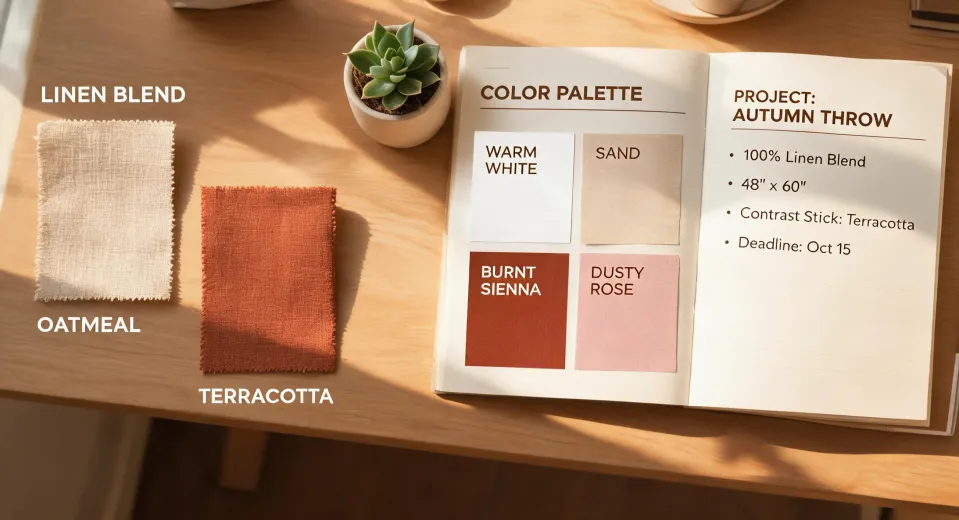
Linara is one of Romo's workhorse fabric families. It isn't a single fabric; it's a collection of plain and textured cloths with a linen-style look and relaxed handle. If I remember correctly, it's been a staple for years, and designers keep coming back because it behaves well for both drapery and upholstery.
The key difference between Linara and a standard cotton or linen tweed is the finish. Linara gives you the casual natural texture without the slubby surprises of a pure linen. For rush projects, that's a real advantage: you can tailor it, hang it, and trust it to look consistent. I want to say most Linara options are linen-rich or linen blends, but don't quote me on the exact fiber percentages—always check the label before you quote a client.
Can I get Romo fabrics on a rush order?
In my role triaging rush orders, the honest answer is: it depends on stock. Romo's showroom network and stock lines help, but the first thing I do is check availability. If it's in stock, 48-hour delivery is possible with express freight—if the warehouse is close to you and the carrier cooperates. If it's not stocked, no amount of rush fees will fix it.
For the latest Romo fabrics, I usually tell people to skip the generic search and check a showroom or the official trade portal. The social hashtag romo_fabrics can be useful for seeing real installs, but it's not a substitute for stock confirmation.
I learned the stock lesson the hard way in 2023. We saved $80 by sending a sample via standard mail, then spent about $500 on express delivery after the designer made a final decision too late. The net pain could have been avoided with one phone call. Now our policy is: verify stock, then freight.
USPS First-Class Mail as of January 2025: 1 oz letter $0.73; 1 oz large envelope $1.50. Verify current rates at usps.com.
For sample orders, use expedited options too. Standard mail is fine for planning, not for deadlines.
Is Romo right for commercial projects?
Yes, but specify carefully. Romo is widely used in hotels, restaurants, and boutique offices because the brand has a complete decorative fabric and wallcovering range. The aesthetic matters in hospitality—guests form an opinion in the first thirty seconds. Quality perception is part of the product.
That said, I won't tell you any fabric is indestructible. Instead, ask for the technical specs: abrasion results, lightfastness, and cleaning codes. For high-traffic seating, choose a tighter weave or a performance velvet. For drapery, ask about flame-retardant finishes if the project requires it. The right Romo fabric will perform well if you pick the right construction for the job.
What is polyester mesh fabric?
Polyester mesh fabric is an open, netlike knit made from polyester yarns. You see it in activewear, sheer curtains, sport bags, and decorative layering. It's also the material behind those loop-and-strap fabric covers on ornament packaging. Because it's a knit, it stretches slightly; because it's polyester, it holds its shape and dries fast.
A practical note: in the US, fiber content claims are regulated by the FTC under 16 CFR Part 303. That means a product labeled polyester mesh must be identified as polyester, not just mesh. If you're comparing Romo sheers to a mesh alternative, check the label and the hand feel. Mesh is much more open than a woven decorative sheer, so light transmission and privacy are completely different.
Why do velvet Christmas balls show up in fabric conversations?
This is one of those questions I didn't expect, but it makes sense. Every year, holiday stylists and editorial spreads feature velvet Christmas balls—those plush, soft ornaments for luxury trees and mantle styling. That same texture trend carries into interiors. When clients see velvet balls in a boutique hotel or a magazine, they start asking for velvet drapery and velvet upholstery.
Romo's velvet line is a natural fit for that mood. The latest Romo fabrics I've seen lean into tactile surfaces: plush velvets, chunkier weaves, soft-hand blends. If a client sends you a photo of velvet ornaments and says they want this feeling, they're asking for color depth and a soft touch. You don't need to make ornaments out of Romo—please don't cut up yardage for that. But the same velvet language can absolutely anchor a room.
Why does textile industry India news matter?
If you search for fabric pricing and keep seeing textile industry India news, there's a reason. India is a major producer of yarn, decorative fabric, and home textiles. When cotton prices, export duties, or shipping routes shift, you feel it in lead times and quoted yardage costs. It's a global supply chain, and India sits in the middle of it.
I can't speak to Romo's exact sourcing—I won't pretend to know their supply chain. What I do know is from my own purchasing: in Q4 2024, several mills sent revised pricing notices within the same month. That's why I watch trade headlines before promising a price to a client. You don't need to become an industry analyst, but a quick scan of textile industry India news can help you explain a quote change or a longer lead time before the client panics.