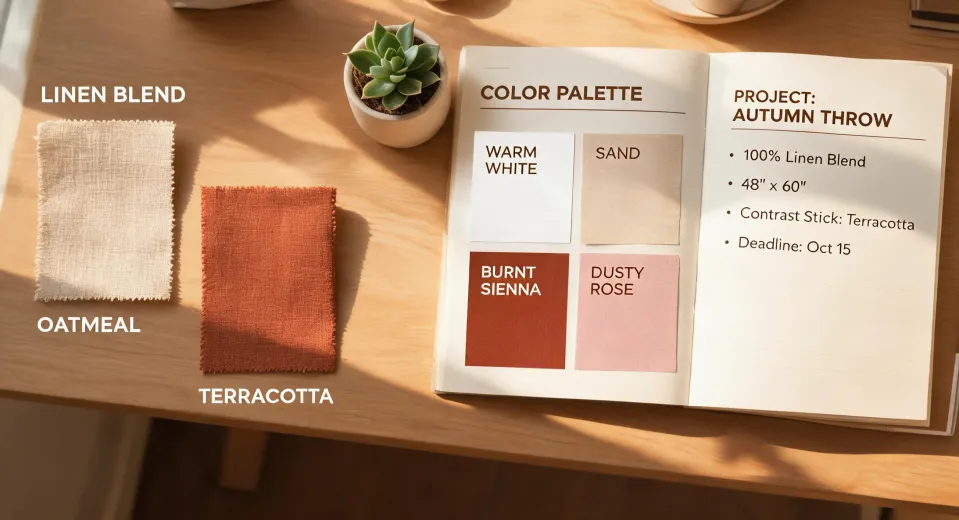
Last spring, I sat on a rolling stool in our back office, surrounded by swatch books, trying to explain to my boss that “dark green” wasn’t a fabric specification.
I’m the office administrator for a 185-person company—actually 180, plus a few recent hires, so don’t hold me to exact numbers. I handle our purchasing: about $400,000 a year across office supplies, furniture, maintenance, and the occasional staff gift. I report to operations and finance, which means I’m the person who has to justify every line item.
When I took over purchasing in 2020, I processed 60-80 orders a year across 8 vendors. I knew chairs and desks and copy paper. I did not know textiles. This project changed that.
It Started With a Breakroom Request
The sign on the wall said Breakroom, but it felt like a converted conference room with a fridge. My boss wanted to make the area less depressing. The chosen move: replace the two folding high tables and add bar-height seating. A designer we’d used before wrote, “Four velvet bar stools.” I read that and thought: okay, I can buy velvet bar stools online, right?
I Googled “velvet bar stools” and got everything from $89 knock-offs to $1,400 designer pieces. One of the top results was for Romo Mattress and Furniture Joliet. For a second, I thought Romo made furniture and mattresses. Turns out, that Romo is a different Romo. The Romo I needed turned out to be the Romo Group fabrics brand—decorative fabrics and wallcoverings sold through showrooms to the trade.
The designer laughed when I told her. She said, “If you want custom upholstery, you pick a fabric first, then have the frames made. Don’t buy the stool until you know the fabric.” That was my first mindshift: fabric isn’t a color choice, it’s a technical decision.
Picking a Fabric: Not All Velvet Is Equal
Romo sent us a stack of sample books. Velvets, twills, knits, textured weaves, wallcoverings. That was the first time I understood what “the Romo Group fabrics” actually included. It’s not one fabric line. It’s a group of collections that cover a lot of commercial and residential territory.
We picked a deep evergreen velvet for the stools. It looked expensive and modern. But before I committed, the designer asked for the performance specs. That’s when I learned about rub count—trade speak for abrasion resistance. Most contract upholstery fabrics have a result from testing. For high-use seating, you generally want something that handles heavy commercial use. The fabric we chose didn’t have the highest number I saw, but it was appropriate for a breakroom where people sit for 30 minutes, not an airport waiting lounge.
Here’s where I made a rookie mistake. I wanted the velvet to match our brand green, which I knew from our printed materials as Pantone 343 C. I asked the Romo rep, “Can you match this exactly?” She was very polite: Pantone’s color matching system is built around inks, not woven fibers. Fabric dye lots are different. My print vendor had once explained color difference using Delta E, a measure used in color management. Delta E below 2 is considered tight for brand-critical print, but textiles have a different set of variables. We held physical samples in the room and ordered from those.
That interaction stuck with me. I went from treating fabric as a color swatch to treating it as a material with a job to do.
The Cotton Knit Fabric Wholesale Tangent
The same project included a lounge area with acoustic panels. We wanted to wrap the panels in fabric to reduce noise and make the room feel softer. The panel manufacturer said we could use a stretchy knit fabric, and I remembered hearing about buying cotton knit fabric wholesale as a budget option.
So I searched “cotton knit fabric wholesale” and ordered sample swatches. They were soft and cheap. The first one felt like a T-shirt. The second one felt like a T-shirt with better manners. I honestly didn’t understand why the designer cringed.
Then I put a sample next to a contract knit from Romo. Same color family, totally different fabric. The wholesale cotton knit was nice for a craft project, but it didn’t have the engineered stability or the documentation for commercial use. It also had a lot of stretch in one direction, which is good for a shirt but risky for a panel that needs to stay taut over time.
(Should mention: I still buy cotton knit fabric wholesale for non-contract things like company T-shirts and handmade samples. It has its place. Just not on commercial panels that need to look good for five years.)
That was my second mindshift: a fabric can be suitable for one job and completely wrong for another. The word “knit” describes construction, not quality.
The Rayon Question
Somewhere in this process, I asked an honest but basic question: “What rayon fabric is this?” One of the swatches had a fiber content label I didn’t recognize. I had heard rayon before, but I wasn’t sure if it was natural or synthetic or something in between.
The short version: rayon is a semi-synthetic fiber made from regenerated cellulose, usually from wood pulp. It’s often used in drapery and soft textiles because it drapes well and takes dye nicely. But it’s not the best choice for high-rub seating unless it’s blended and constructed for contract use. I learned to look at fiber content, not just the marketing name.
That question felt embarrassing at the time, but the designer said something I still repeat:
An informed customer asks better questions and makes faster decisions.
That’s what customer education is supposed to look like—not making someone feel stupid, but helping them understand the trade-offs.
The Result and What I’d Do Differently
The velvet bar stools arrived six weeks later. We upholstered them in the Romo velvet, and they looked exactly like what my boss wanted. The acoustic panels were wrapped in a knit fabric from the supplier’s commercial line, and the room went from “loud lunchroom” to “place where people actually stay.”
Cost? The custom route wasn’t the cheapest option. Four stools with custom upholstery cost us about 20% more than ready-made velvet bar stools might have, plus the wait time. But we got exactly the color, fabric performance, and frame height we needed. No hidden mismatch. No “it looked better on screen” moment.
My sample limitation: this was one modest refresh, not a hotel spec. I’ve since ordered decorative fabric for a smaller internal project, but I’m not an expert. If you’re sourcing for restaurants or heavy hospitality use, your requirements will be stricter. This story is more about the questions to ask than the exact products to buy.
If I had to do it again, I would start with a designer or a knowledgeable sales rep. For a B2B buyer like me, the phrase “the Romo Group fabrics” would’ve meant more if I’d known that it covers decorative fabrics and wallcoverings, not furniture. Also, if you’re looking for “Romo Mattress and Furniture Joliet,” that’s a separate local store—not the same Romo as the fabric group. I’m glad I didn’t order a mattress from a fabric company. Or a sofa from a mattress store. You know what I mean.
What about “velvet bar stools”? My advice: decide on the fabric before you choose the stool. Cheap velvet bar stools can look great in a photo, but the real question is what they’re made of and how the velvet is constructed. If someone won’t tell you the fiber content or rub rating, that’s a red flag.
And if you think “cotton knit fabric wholesale” is the cheapest way to upholster anything, just remember my T-shirt panel story. Fabric is a system of choices. Knowing why you’re choosing one matters as much as the name on the sample book.
That’s the biggest lesson from my crash course in contract textiles: the right fabric for the job isn’t the most expensive or the cheapest. It’s the one you can defend with evidence, backed by someone who’ll stand behind it. That’s what I look for now. It’s also why I don’t mind saying I didn’t know the difference between a velvet and a knit back in March 2024. Now I do.