-
Step 1: Verify the source, not just the logo
-
Step 2: Read the fiber content
-
Step 3: Understand the construction—what knit fabric is called
-
Step 4: Check outdoor ranges separately
-
Step 5: Scrutinize the word "luxury"
-
Step 6: Compare the delivery against the sample
-
Final notes: common mistakes to avoid
As a quality and brand compliance manager at a decorative fabrics company, I don't just look at color. I check every detail that affects a project: fiber content, construction, colorfastness, and whether the label matches the reality. I review 200+ unique items a year, and in 2024, I rejected 15% of first deliveries due to off-spec color or hand-feel.
If you're specifying decorative fabrics—for a hotel renovation, a residential project, or a furniture line—this checklist is for you. It's about verifying what you need to know, not just hoping it looks right. Here are the six steps I use.
Step 1: Verify the source, not just the logo
The hardest lesson I learned? Labels can be misleading. Look for the Romo logo and compare it with the official sample card. Authorized distributors provide consistent labeling, product codes, and batch information. A logo that's slightly off is a red flag.
Why does this matter? Because fake brand-name fabric can become a liability issue—especially in commercial contracts.
Step 2: Read the fiber content
This leads to the big question: What is modal fabric properties and uses? Modal is a semi-synthetic cellulosic fiber made from beechwood pulp. It feels silk-like, is stronger than viscose, and holds its shape well. You'll see it in knitwear and loungewear, and also in decorative textiles that need drape.
In apparel, modal is soft and breathable. In upholstery, it works for decorative throws, pillows, and lightweight covers. But you still need to check care instructions. No label? Ask for fiber content documentation.
Step 3: Understand the construction—what knit fabric is called
This step gets skipped. Knit fabric is made from interlocking loops, which gives it stretch and softness. Woven fabric is made from crossing yarns, which makes it more stable.
Knit fabric in Spanish? That's tejido de punto. If you see that on a label, you know you're dealing with a knit. Not sure? Do the stretch test: knit returns after stretching. Woven doesn't.
For upholstery, I look at stitch density and yarn count. They tell you whether a knit can survive daily use.
Step 4: Check outdoor ranges separately
Romo outdoor fabrics are not regular upholstery fabric. When I first started, I assumed outdoor fabric was just about fading. Totally wrong. Outdoor fabric also needs to resist moisture, mildew, and abrasion. A range labeled outdoor should be able to prove it, not just look weather-resistant.
Look for water repellency, UV stability, and mold resistance. Ask for test data. If the vendor provides it, great. If not, I treat it as unsuitable for exterior use.
Step 5: Scrutinize the word "luxury"
Names like Starfield Luxury Textile sound impressive. But "luxury" is a marketing term, not a spec. A luxury textile still needs to be vetted: fiber content, abrasion resistance (check the Martindale cycles), and lightfastness.
Honestly, I prefer a minimum of 30,000 cycles for upholstery that will get real use. But that's a threshold, not a guarantee. If a test report shows a lower number, it doesn't automatically mean bad fabric; it may mean this is better suited for drapery than a sofa.
So ask: "What's NOT included?" That applies to specs and to pricing. The vendor who lists everything upfront—even if the total looks higher—usually costs less in the end.
Step 6: Compare the delivery against the sample
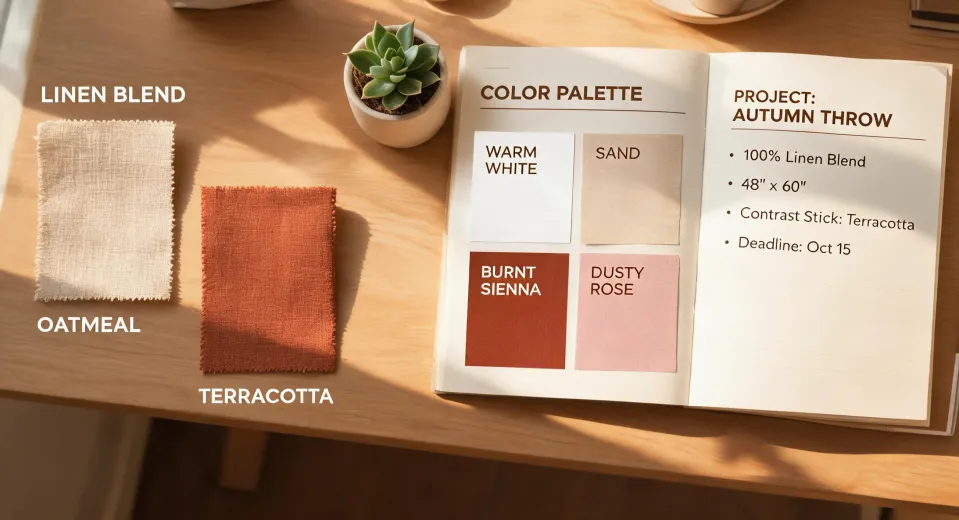
Samples can be perfect. Deliveries can disappoint. In 2024, I rejected an entire delivery because the color didn't match across rolls. The sample was fine. The bulk fabric wasn't suitable for a final installation.
Before approving bulk fabric, do this:
- Compare each roll to the approved sample.
- Check color and hand-feel—and do it in natural light. (Pro tip: this matters.)
- Take a sample from inside the roll, not just the outer layer.
- Measure repeat length and pattern alignment.
If the color deviates by more than ΔE 2, I reject it. Don't accept "it's within production tolerance" unless that tolerance is written into your contract.
Final notes: common mistakes to avoid
Never assume a premium brand automatically means zero defects. It reduces risk. And never buy a "cheap deal" without a spec.
If you're sourcing with international labels, respect local terminology. For example, tejido de punto on a Spanish label means knit fabric. Words like modal are easy to miss, but their properties define what you can expect from cleaning and wear.
I still don't fully understand why some manufacturers use "luxury" for materials that aren't. My best guess: marketing likes ambiguity. So when I see a phrase like Starfield Luxury Textile, I audit the fiber, the construction, and the full label before getting excited.
The bottom line? Verify everything. Demand transparency. Document it all. That's my job—but by final inspection, it should be yours too.