-
It Started With a Phone Call at 4:47
-
The Order That Looked Right on Paper
-
Wednesday Morning: The Triage
-
The Romo Showroom Conversation That Saved Us
-
The Outdoor Fabric: Actually the Easy One
-
Friday: The Day It All Came Together
-
What I'd Honestly Recommend (and Where the Limits Are)
-
What I'd Do Differently
-
The Bottom Line
It Started With a Phone Call at 4:47
When my phone rang on a Tuesday afternoon, I almost didn't answer it. The caller ID said Maria, a designer I'd worked with on a couple of smaller projects. Her voice had that tight quality that means someone is staring at a calendar and doing math in their head.
"We have a problem," she said. "The hotel opens Sunday."
I knew the project. A boutique hotel in the city, 42 rooms, residential-style finishes. The furniture install was supposed to happen in stages. Stage one was done. Stage two was not where it needed to be.
"The velvet we specified for the lounge seating arrived wrong," she said. "The color is off. Notably off. We can't put it in a room the owners are touring Friday."
So I found myself at 5 PM, trying to source 85 yards of Romo velvet in the right color, coordinate an outdoor fabric order that hadn't shipped, and—in a twist I didn't see coming—figure out where to buy knit fabric online for lobby bench cushions. The client's wife had decided the benches needed to feel "cozy." Whatever that meant in fabric terms.
I've coordinated fabric orders for a mid-size interior design firm for about six years now. Hospitality and commercial projects, mostly. In my role, rush orders aren't the exception. But five days to fabric, fabrication, and install is tight. Not impossible, but tight.
The Order That Looked Right on Paper
The original order had been placed six weeks earlier. The lounge furniture called for a Romo velvet—a deep emerald with enough texture to not look flat under recessed lighting. The client fell in love with it in the showroom, which I understood. Romo does velvet well. It's one of those products where the depth of color and the hand feel make people willing to pay for it.
The drapery in the dining area was specified in a pure cotton satin fabric, chosen for its soft sheen in evening light. And the terrace furniture was going to get a colorful outdoor fabric—bold stripes, something with UV protection that wouldn't fade by month eight.
Sounds straightforward. It wasn't.
The cotton satin arrived on time and looked great. The velvet arrived on time—but the color didn't match the sample. Under the upholsterer's work lights, it read closer to forest green than emerald. Against the paint swatch, it clashed. Probably a dye-lot variation. It happens. I've never fully understood why some color variations slip through quality checks, but they do. It's rare. It's also irrelevant when it's your project.
And the outdoor fabric? Didn't ship. The order had gone through a distributor who didn't actually have enough inventory of the pattern. Nobody caught it until the terrace install was two weeks out.
Wednesday Morning: The Triage
By Wednesday at 8 AM, I had a list:
- 85 yards of Romo velvet in the right green. Five-day turnaround.
- 60 yards of colorful outdoor fabric, UV-rated, bold pattern.
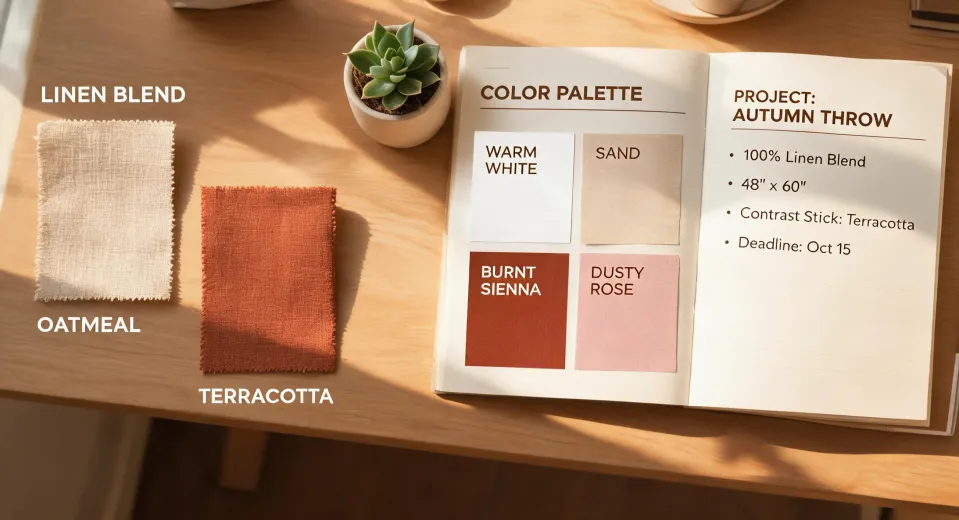
- Knit fabric for lobby bench cushions. Oatmeal, apparently.
The cotton satin was fine. One problem solved before it started.
Let me talk about the knit fabric, because it turned out to be the most annoying part. The search for "where to buy knit fabric online" is a rabbit hole. There's no shortage of sites selling knit fabric, but most of it is apparel-grade, sold by the half-yard, in colors that look great in photos and arrive looking slightly different in person. For upholstery-weight knit with a decent abrasion rating? That's a completely different search.
I spent two hours emailing suppliers. Got answers like "we do mostly custom apparel" and one vendor who said they don't sell to trade. Eventually found a contract textile supplier in North Carolina with a brushed polyester knit, 58 inches wide, heathered oatmeal, and enough stock. I ordered a sample. The client approved it. The roll arrived Thursday afternoon—which honestly surprised me, because in my experience expedited fabric shipping either arrives in 24 hours or it arrives three weeks late. There's no middle ground.
The Romo Showroom Conversation That Saved Us
But the big one was the velvet. We could have swapped the fabric entirely. There are other velvets in the Romo range that would have worked. But the client wanted the original. The furniture was already built around that color. The lighting was chosen to work with that specific green. I didn't want to explain to a hotel owner why his lounge now had a different shade than he approved.
So I called the Romo showroom. I'll be honest—I wasn't expecting much. My past experience with rush special orders is about 50/50. I was waiting for "sorry, that's an eight-week lead time."
Instead, the person on the phone said, "Let me check what's available across the Romo Group. We have a few lines that share color systems."
That's the part I think people don't understand: the Romo Group fabrics share internal dye systems, so if a specific velvet is backordered, a sibling line might have the same color family with a similar hand feel. That flexibility doesn't exist with every brand.
We found a match in a Romo Black Edition velvet. Same color family. Slightly different pile, but honestly, the difference would only show if you were pressing your nose into it. The catch: it was in the UK warehouse. That meant international shipping, which meant Thursday pickup and a lot of prayers about customs clearance.
Here's why I said yes: the showroom rep gave me specifics. The exact shipment date. The carrier. The tracking number. She wasn't vague. When someone gives you details instead of "should be fine," that's a green flag. I've gotten burned by "should be fine" too many times.
The Outdoor Fabric: Actually the Easy One
The colorful outdoor fabric surprised me. The supplier that had originally been specified didn't have enough stock. But a search through the same pattern family led me to a different supplier with 40 yards on hand. Not the 60 we needed.
Forty yards was workable if we switched the accent furniture to a complementary solid. I pitched it to Maria as a design compromise. The client ended up saying the mixed look was "more collected" than the original plan. So it was fine. Sometimes a constraint is actually a design improvement.
One thing I'll say about colorful outdoor fabric: don't just check the color, check the UV rating. A bright pattern is great until it's a faded sad version of itself by month eight. The fabric we used had documentation on UV stability and met the warranty requirements. It wasn't the cheapest option, but it was the one with evidence.
Friday: The Day It All Came Together
The velvet landed at the airport Thursday night, cleared customs Friday morning, and was on a truck by noon. Maria and her installer met it at the loading dock at 2:30 PM. The walkthrough was at 4 PM. They made it. I don't think I've ever seen a more stressful install, and I've done this for a while.
The knit bench cushions? Fine. The cotton satin drapery? Perfect. The terrace furniture looked genuinely good in the sunlight. The only moment of panic was when the installer texted me a photo of the velvet unrolled under the work lights and asked "this green good?"
I zoomed in. It looked right. I said yes. The opening went well.
What I'd Honestly Recommend (and Where the Limits Are)
People ask me about Romo pretty often. I want to give an honest answer rather than a sales answer.
Romo velvet is genuinely good. The texture, the depth of color, the way it photographs—it's a premium product. I recommend it for projects where design intent and tactile quality are the priority. But it's not magic. You still need to check dye lots, match samples to actual lighting, and build in real lead time. If your project is purely budget-driven, there are cheaper options. If you need 500 yards by next week, there are faster options.
The pure cotton satin fabric we used for the drapery was lovely. It draped well and caught the evening light exactly as intended. But I wouldn't specify it for high-traffic seating—cotton satin isn't known for stain resistance. It's basically a drapery fabric, in my view, not a cushion fabric.
And about knit fabric: if you're a home sewer looking for apparel-grade knit, the big online fabric retailers are fine. If you need upholstery-weight knit for a commercial project, search for "upholstery knit" or "contract knit" and ask for abrasion numbers. Order a sample. I almost skipped the sample step on the oatmeal knit because I was in a hurry. The sample was slightly rougher than the client imagined. We got lucky—she liked it anyway. Lucky isn't a process.
I can only speak to what worked for us. We're a mid-size firm with an established account and a warehouse. If you're a solo designer ordering a single roll, your experience might be different. The showroom was helpful because we had a history. Calling cold is a different equation.
What I'd Do Differently
Looking back, I should have requested a physical sample of the outdoor fabric against the actual terrace paint before ordering. The showroom sample looked right under fluorescent lights. Natural sunlight was a different story. The contrast was close but not perfect.
I also should have verified the distributor's stock in writing. The original outdoor fabric order fell through because nobody confirmed the inventory. That's on us. We didn't have a formal process for verifying distributor-held stock. It cost us a week and a lot of anxiety. I've since made it policy: if it can be backordered, get written confirmation before the order goes out.
And I would have escalated the stock question earlier. When I heard "should be in stock," I let it slide. That was my mistake. The phrase "should be" in supply chain is a red flag, not a reassurance.
The Bottom Line
The hotel opened on Sunday. The owners walked into the lounge, looked at the emerald velvet, and asked if it was a custom color. "It's something we sourced specially," I said. Which is true, just not in the way they assumed.
Fabric orders have limits. Every product has a lead time, a color range, a stock level, and a point where you trade one attribute for another. The Romo Group's strength, in my experience, is that the breadth of their portfolio gives you options when the original plan hits a wall. But options aren't guarantees. The closer your deadline gets, the more you have to give up—color, quantity, pattern, or price. You rarely get all four.
If you're in the middle of a rush order right now, here's my advice: verify stock in writing, order samples even when you're in a hurry, and ask your showroom rep about sister collections before you assume a fabric is gone. And if someone tells you a shipment "should be fine," get a tracking number before you hang up.