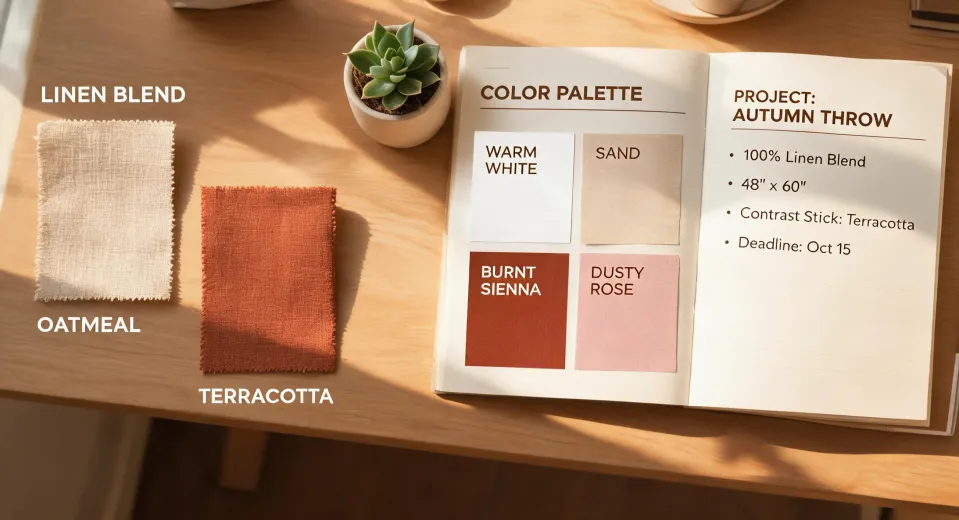
I still kick myself for the first time I ordered 140 yards of hunter green upholstery fabric without looking at a physical sample. It was 2017, I was sure about the color from a screen, and the supplier shipped what was technically hunter green—but on a billiard table, not a hotel lounge. Three thousand two hundred dollars later, I learned the first rule: fabric names are only the beginning of the story.
The satin vs velvet fabric question keeps coming up in my work, and I used to answer it wrong. I thought it was about taste. It isn't. (Okay, it is partly taste. But taste is the easy part.) The real issue is structure, and structure is what makes a piece look beautiful or fail in eleven days.
Satin vs velvet fabric: the wrong question
People ask me which one is better for upholstery. My honest answer after eight years and about $32,000 in documented mistakes? Neither. It depends on the job and the test report.
Look, satin is not a material. It's a weave—a weave with floating yarns that sit on the surface and catch light. Velvet is not a material either. It's a pile construction with short cut yarns standing upright. You can make both from silk, polyester, cotton, or blends. That means you cannot compare them the way you compare apples and oranges; you have to compare them by how they behave under a specific kind of use.
Here's the thing: satin can look stunning on a throw pillow that gets handled gently. On a contract chair that people slide their laptops across? Satin will show every snag. Velvet can handle more friction, but it also crushes, water-stains, and acts differently depending on the direction you brush it. I am not saying velvet is superior. I'm saying the word choice hides the real decision.
The real problem is structure, not material
I learned this the hard way in March 2022. I specified satin for 18 guest chairs because the sample was gorgeous. The manufacturer kept asking why I did not specify a contract-grade fabric. I thought they meant durability. I was wrong. Satin's floating yarns are the problem. After about 600 rubs in the wrong place, the surface started to look fuzzy, then you could see the loose yarn catching. The replacement order cost $4,600 and added two weeks to a client's opening schedule.
The frustrating part? The fabric did exactly what satin does. It was not defective. It was misapplied. That is when I started asking for two numbers before I selected anything: abrasion results and the fire test classification. For upholstery, the common abrasion tests are Wyzenbeek (ASTM D4157) and Martindale (ISO 12947). A contract fabric is usually specified at 30,000 double rubs or higher; a residential piece might be acceptable at 15,000. Those numbers are available from the supplier's test report. Based on standards I have seen as of January 2025, verify them for your own spec.
Hunter green is a construction problem, not a color problem
The same logic explains why hunter green upholstery fabric keeps causing arguments between clients, designers, and suppliers. Color is not a fixed object. It depends on how light hits the yarn, whether the yarn is twisted, whether the surface is fuzzy or smooth, and whether you are looking at a warp yarn or a weft yarn.
I had a moment with the Romo Linara fabric that finally made this click. I put it next to a velvet from the same group and the same color family. They looked like two completely different palettes. I thought the mill made an error. They didn't. I work with a lot of decorative houses, and the Romo Group fabrics are broad enough that you can compare a velvet, a twill, a knit, and an outdoor base side by side—and that is exactly the point. The base changes the color. A hunter green in a knit will not look like a hunter green in a velvet, even if the dye code is identical.
Since then, I refuse to approve any color from a digital mockup or a one-inch swatch. I need a cutting large enough to see light strike and, if possible, the actual chair frame it will go on. That one change would have saved me $3,200 in 2017.
What a mistake actually costs
A lot of advice about satin vs velvet fabric focuses on luxury and drape. No one talks about the invoice after the mistake.
In 2017, the wrong hunter green cost $3,200 plus a two-week delay. In 2022, the satin chair disaster cost $4,600. That does not include my time, the client's frustration, or the installer's rescheduling fee. On a typical small commercial order, one wrong fabric can wipe out a third of the margin. For a one-person studio or a small design practice, that is not an inconvenience. That is the difference between making payroll and not.
This is why I have zero patience for suppliers who make small customers feel stupid. When I was starting out, I placed a $200 sample order and asked for guidance. The vendor who took it seriously is still my vendor today. Small does not mean unimportant. It means potential. I am not saying small orders deserve ridiculous discounts. I am saying they deserve the same curiosity and honesty as a big hotel contract.
Home textile sustainable manufacturer claims need the same scrutiny
The same pattern shows up in sustainability language. A home textile sustainable manufacturer can say a lot of things about recycled fibers, eco-friendly dyes, or carbon commitments. But sustainable is not one standard; it is a collection of claims.
I am not a certification auditor, so I stopped trusting the word alone. As of January 2025, the labels I actually check for are GOTS for organic fiber, OEKO-TEX Standard 100 for harmful substances, and FSC for wood-derived materials. A supplier should be able to tell you which certification covers which production step. If they cannot, that is the same red flag as a fabric that cannot supply an abrasion report. You are being asked to trust a vibe, not a fact.
What fixed my process
The answer was not switching to a specific brand or giving in to premium upsells. It was a boring checklist that I now run before every order:
- Define the use case first: residential sofa, hotel room chair, restaurant banquette, outdoor lounge?
- Ask for abrasion and fire test reports in writing.
- Look at color on the actual base construction, not on a screen.
- Order a cutting big enough to see the face and the drape.
- For small orders, ask if a pilot yardage is available before committing.
That checklist has caught 47 potential errors in the past 18 months. The best part is not the number; it is the quiet feeling of no longer lying awake at 3 a.m. wondering whether the fabric will survive the first week.
The most expensive words in furniture sourcing: I think this will work.
My experience is based on about 120 orders, mostly mid-range residential and light commercial interiors. If you are working in luxury hospitality or high-turnover contract furniture, your test requirements will be stricter. But the principle stays: the problem is rarely satin vs velvet fabric. The problem is asking the wrong question before you commit.